

Profile9 min
A lifetime in the classroom: the educators who built institutions
Some careers are measured in decades, and in the schools they leave standing. A look at three.
13 Dec 2025Read
Profile
The teachers and heads whose influence travels far beyond their own staffrooms.


By Esther Auma, Features Writer
Features writer following the schools, founders and families shaping the sector.
Published 9 min read
Read summarized version with:
Most good teachers are known only to the pupils lucky enough to have sat in their classes. Their influence is real but bounded, a cohort here, a year there, a handful of lives quietly changed. A smaller number do something different. They reshape how an entire subject is taught, train the teachers who go on to train others, or build a department that becomes the benchmark a region measures itself against. This is a look at that second kind, the educationists whose effect outlasts any single school year and travels far beyond their own staffroom.
The distinction is not about talent alone; plenty of gifted teachers spend an entire career in a single classroom and change the world one pupil at a time. The educationists in question are defined by reach, by the fact that their effect compounds beyond the people they personally taught. A teacher who inspires a class influences a class. A teacher who trains the trainers, or whose methods are adopted across a school and then a region, influences classes they will never see. The classroom, for them, was only ever the starting point.
That reach takes very different forms, which is part of what makes the type hard to spot from the outside. It rarely fits one mould.
The measure of a teacher is not the pupils in the room. It is the teachers those pupils become, and the rooms they go on to run.
One frustration runs through any account of these educationists: the system that depends on them is bad at recognising them. The reward structures of Ugandan schooling are built around visible, short-term outputs, this year’s division counts, this term’s enrolment, and not around the slow, diffuse work of building people. A teacher who spends a decade raising the standard of a whole department, or training the colleagues who will outlast them, generates no metric that a league table captures. Their contribution is enormous and almost invisible, which is precisely why it deserves to be named.
The invisibility is compounded by their own temperament. The educators with the widest reach are often the least interested in claiming it. They talk about the subject, the pupils, the department, rarely about themselves. The curriculum reformer is content that the syllabus works; the turnaround head is proud of the schools, not the credit. That modesty is admirable and also a problem, because a profession that cannot identify its most influential members cannot learn from them or replace them when they go.
Beneath the different forms, a few traits recur. These educationists treat their own knowledge as something to be transmitted rather than guarded, which is why their influence multiplies instead of dying with their retirement. They think in institutions and systems, not only in lessons, asking how a method might travel rather than merely how a class might be taught. And they take a long view, content to invest in people whose payoff will arrive after they themselves have left. None of these is glamorous. All of them are the reason their effect persists.
There is a practical reason to celebrate them beyond simple justice. A school system improves fastest not by finding more brilliant individual teachers but by spreading good practice, and the educationists who spread it are the multipliers that make the whole system better. Recognising them is not a sentimental exercise. It is a way of identifying, and protecting, the people on whom the quality of everyone else’s classroom quietly depends.
What unites every educationist in this account is the sense that the classroom was the beginning of their work, not the boundary of it. They began, as all teachers do, with a room and a register. But their ambition reached past the room, to the subject, the department, the colleagues, the syllabus, the next generation of teachers. Their pupils were the first beneficiaries of that ambition and far from the last. To map their influence is to trace lines that run out of the classroom and across the whole of Ugandan schooling, and to see how much of it rests on people the system has never quite learned to name.
Discover, compare and shortlist schools across every curriculum in Uganda.
Browse schoolsSome careers are measured in decades, and in the schools they leave standing. A look at three.

A veteran Brother on why a great boys' school is built in decades, not exam seasons.
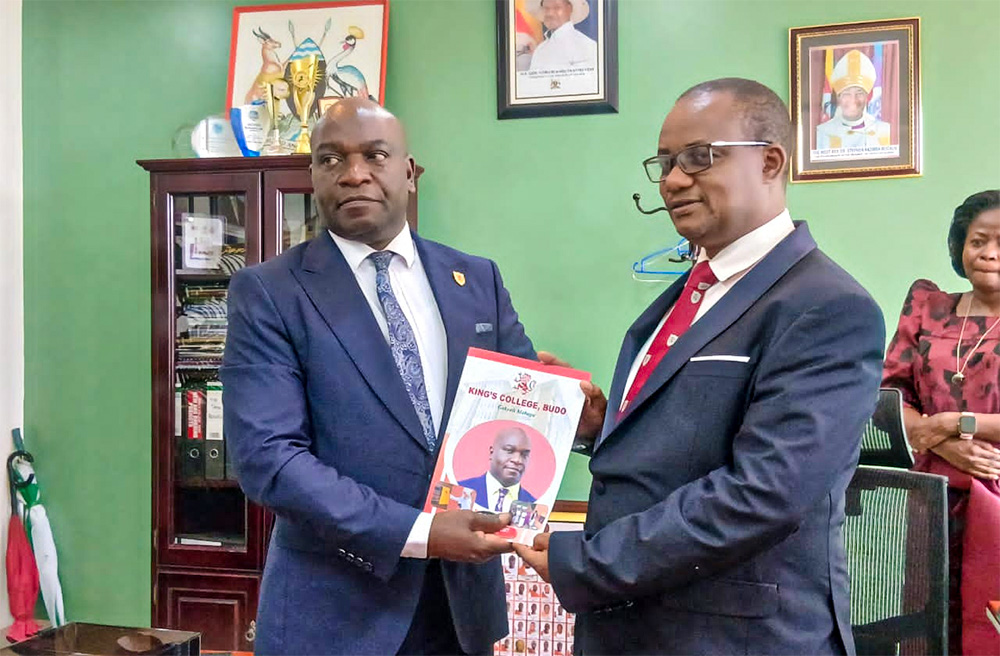
King's College Budo opens the year under its first internal appointment to the headship in over a decade.
Newsletter
One considered email a month, the pieces worth your time, and nothing else.
Praecip keeps editorial independent: our verdicts are never for sale, and any sponsored piece is clearly labelled.